



Tall Wall-Mounted Cargo Lift, 1000 kg, 6–10 mSKU: TMB-WH1000-523999549
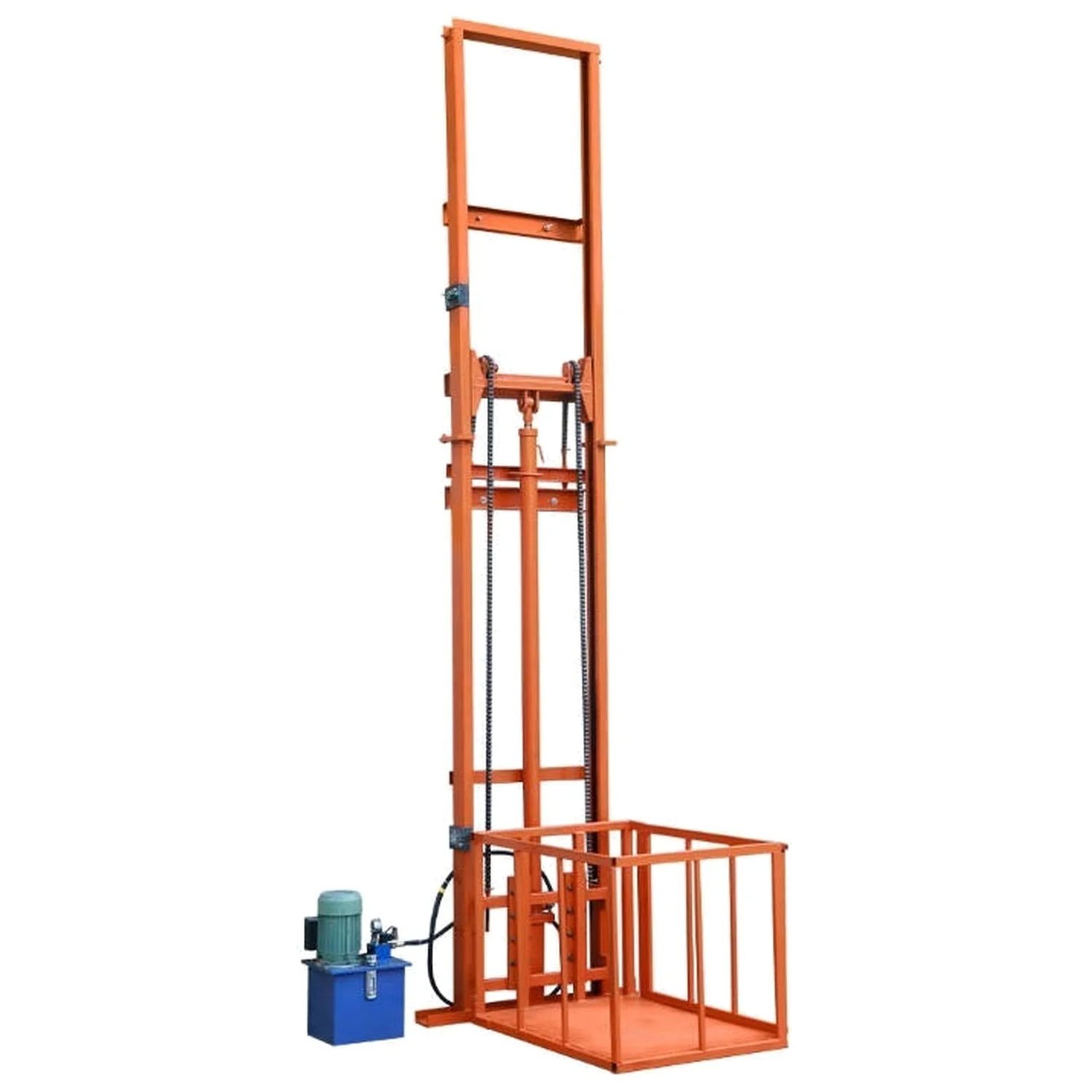
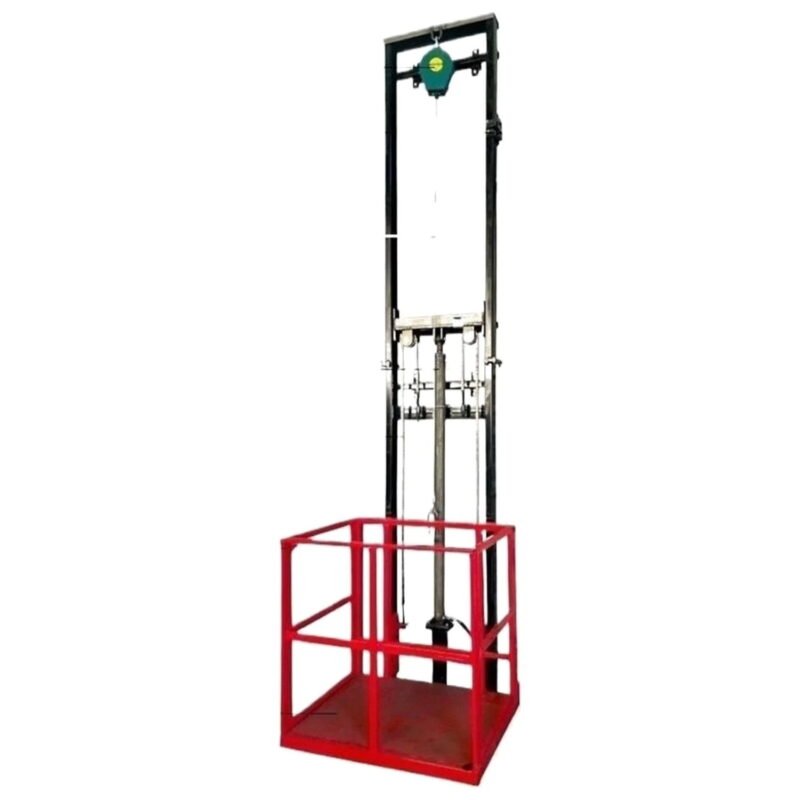
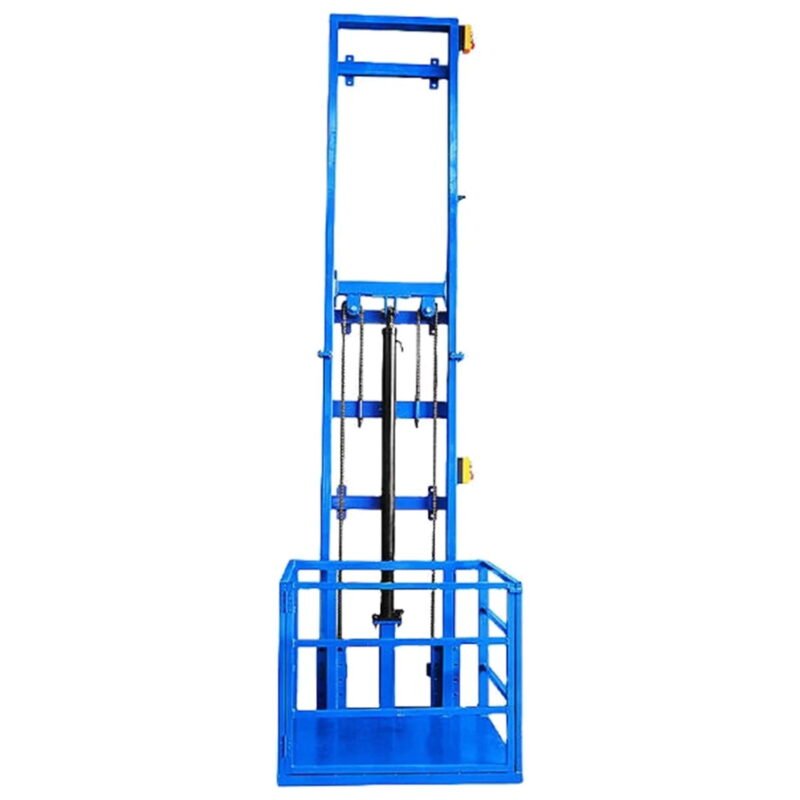
A caged platform bolted to an existing wall and run up past four floors: 1000 kg on a 1000 × 800 mm non-slip deck, 6 to 10 m of lift, mast head 7 to 11 m above the loading floor, and the hydraulic station standing on the ground beside it.
- ✓
Held in stock in the standard heights and dispatched from our own warehouse. Another height, a wider platform or a different colour is built to order — see custom options.
- ✓
Built to the specification published here — same mast, cylinder, chain and platform on every unit we ship.
- ✓
Nothing ships until you approve the freight quote in writing.
- ✓
Packing list, commercial invoice and bill of lading sent with every shipment.
The same lift, for a wall four storeys high
The 2 to 5 m version of this lift does one floor. This one does two to four: the mast is built in lengths up to 11 m, the chain run is longer, and the oil volume and station are sized to push the same tonne of goods up the whole way.
Two to four storeys on one mast
Lifting heights of 6, 7, 8, 9 and 10 m are standard, with an overall mast height of 7, 8, 9, 10 and 11 m. The metre above the lifting height is the headroom the cage needs when it is at the top — measure it on the building, not on the drawing.
A tonne on a 1000 × 800 mm deck
The platform is 1.8 mm non-slip steel plate, rated up to 1000 kg, inside an 800 mm guardrail on a cage footprint of about 1000 × 1000 mm. A pallet, a stack of cartons or a drum goes on at floor level and comes off level at the top.
Cylinder and chain, sized for the longer run
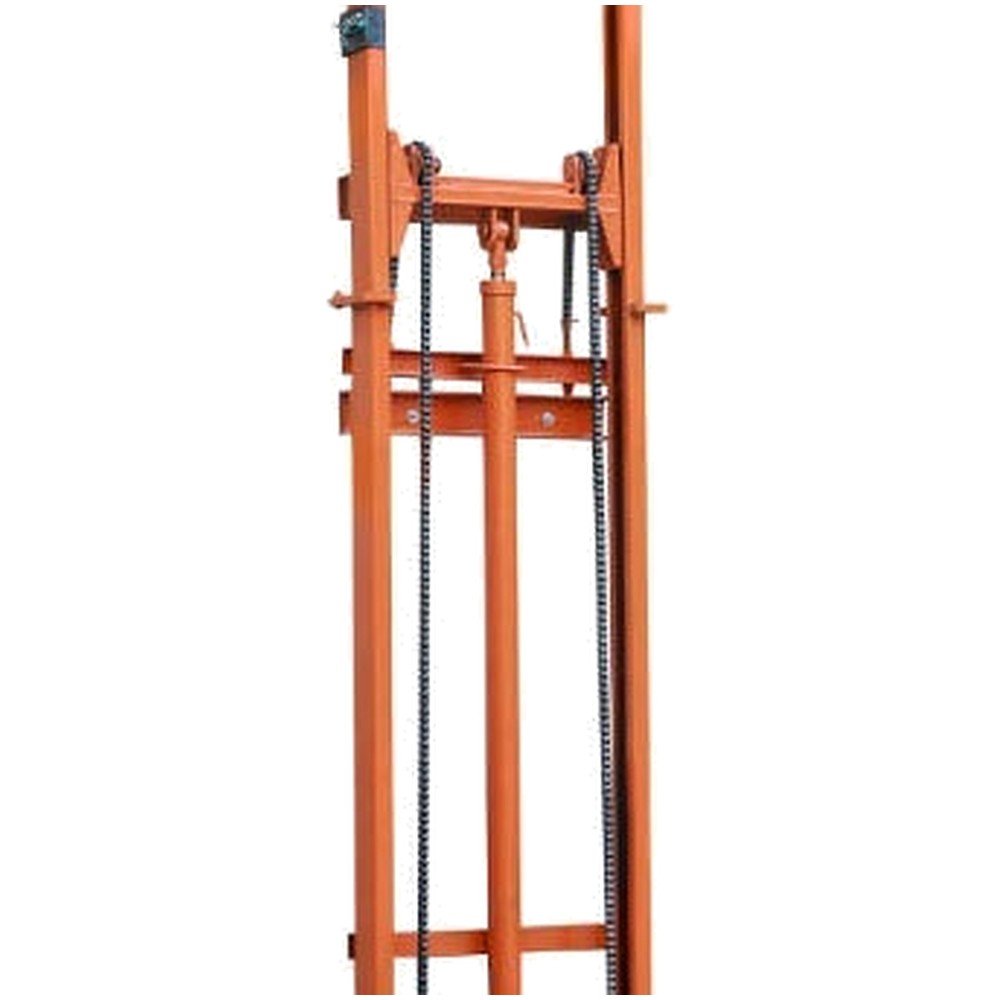
A 63-type hydraulic cylinder stands between the two rails and pushes a crosshead up; 5-link chain runs from the crosshead to the cage on both sides. At 10 m the run is long, so the station is the 3 kW unit and the tank takes about 18 litres of ISO VG46 oil — filled on site, not shipped with the machine.
Stops at both ends of the run
Two limit switches are fitted, one for each direction, so the cage stops at the top and at the bottom without the operator having to release the button in time. The switches are set on the mast and can be reached for adjustment.
Six to ten metres: the technical data
Five standard sizes on the same mast and cage. Pick by the lifting height you need — the overall height is always one metre more, because the mast has to stand above the upper landing.
| Model | Lifting height | Overall height | Capacity | Platform |
|---|---|---|---|---|
| S | 6 m | 7 m | 1000 kg | 1000 × 800 mm |
| M | 7 m | 8 m | 1000 kg | 1000 × 800 mm |
| L | 8 m | 9 m | 1000 kg | 1000 × 800 mm |
| XL | 9 m | 10 m | 1000 kg | 1000 × 800 mm |
| XXL | 10 m | 11 m | 1000 kg | 1000 × 800 mm |
Lifting & power
| Lifting mechanism | 63-type hydraulic cylinder with 5-link chain to the cage |
| Hydraulic station | 3 kW low-speed motor on an oil tank, standing on the floor beside the mast |
| Hydraulic oil | About 18 L of ISO VG46 (No. 46) — filled on site, not shipped |
| Limit switches | Double, one for each direction of travel |
| Load capacity | Up to 1000 kg |
| Lifting height | 6 / 7 / 8 / 9 / 10 m |
| Overall height | 7 / 8 / 9 / 10 / 11 m |
| Power supply | Confirmed per destination on the quotation drawing |
Deck, finish & mounting
| Platform | 1000 × 800 mm, 1.8 mm non-slip steel plate |
| Cage footprint | About 1000 × 1000 mm including the guardrail frame |
| Guardrail | 800 mm high, vertical bar infill (mesh to order) |
| Mast | Two rails, 700 mm across the head |
| Structure | Welded steel, primed and painted |
| Colours | Yellow, red and blue standard; other colours to order |
| Mounting | Bolted to an existing wall on brackets — no shaft, no pit, no machine room |
| Control | Wall-mounted push-button box on a cable to the station |
Manually measured dimensions may vary slightly; refer to the actual machine. Height, platform size, bracket layout, colour and power supply for a specific build are confirmed on the quotation drawing.
Cylinder in the middle, chain on both sides
The cylinder does the pushing, the chain carries the cage, the two rails keep it square, and the station stays on the floor where it can be reached for oil and servicing.
Cylinder up the middle, chain each side
The 63-type cylinder stands between the two rails and pushes the crosshead up. Chain runs from the crosshead down to the cage on both sides, so the platform is pulled at two points and stays level even when the load sits to one side of the deck.
5-link chain, greased in the open
The chain is the 5-link type, which has some corrosion resistance and suits the damp and dusty places these lifts are fixed in. It runs in the open on the outside of the rails, where it can be seen and greased, rather than inside a sealed box that hides wear.
Down level with the floor, inside an 800 mm rail
The cage lands level with the floor, so goods are slid on from a pallet truck instead of being lifted over a lip. The 800 mm guardrail keeps the load inside the frame on the way up, and the 1.8 mm plate takes the nose of a pallet truck without denting.
Up through a floor, no shaft to build
Where the lift runs inside the building the mast passes up through an opening cut in the floor above — wide enough for the cage, nothing more. The wall carries the mast, so there is no shaft, no pit and no machine room to build around it.
Facades, warehouses and plant rooms
Anywhere goods have to change floor by two storeys or more and there is a wall to fix to: the lift takes the footprint of a doorway and the height of the wall it is bolted to.
- Facades and outside wallsThe mast is bolted up an external wall and the cage lands at a balcony, a yard door or a steel platform fixed to the wall, so goods come up from the ground without being carried through the building.
- Warehouses and mezzaninesCartons and pallets go from the ground floor to a mezzanine or a first floor through a floor opening, loaded at floor level at both ends, beside the racking the goods are going to.
- Workshops and plant roomsHeavy parts, drums and toolboxes go up to a service floor on a deck that takes a tonne, without blocking the stair or the roller door for the rest of the shift.
- Basement and cellar storesDeliveries at street level go down through a hatch or a stairwell opening into a basement store, on a cage that fits beside the stairs and leaves the flight usable.
Custom options on this cargo lift
Five heights and three colours are standard. Anything beyond that is built on the same mast and cage, from the same drawings.
- Lifting height6, 7, 8, 9 and 10 m of lift are standard, with overall mast heights of 7 to 11 m. A height between those figures is built to the job — send the floor-to-floor distance and the headroom above the upper landing.
- Platform1000 × 800 mm is standard. A wider or deeper deck is built on the same cage frame, and the guardrail can be opened on the side you load from.
- ColourYellow, red and blue are standard. Any other colour is matched when you order, and your logo can be applied before the machine leaves the factory.
- Fixing and landingThe mast is bolted to the wall through brackets; the landing platform, gate or barrier at each floor is part of the installation. Send photos of the wall and the openings and the bracket layout is drawn to suit.
Freight is quoted separately and confirmed before dispatch
We ship worldwide by sea (LCL and FCL) and by air or express for smaller parts. The mast is the long item in the crate, so a 6 m mast and an 11 m mast do not ship the same way — freight is priced per height and per destination.
-
You place the order online
Your order is recorded and the machine is reserved while the freight is quoted.
-
We send a freight quote in 24–48 hours
Priced to your nearest port, with transit time, or to your door as DDP if you prefer.
-
You confirm and pay the freight
One invoice for the shipping cost. Nothing is dispatched until you approve it.
-
We book, load and send documents
Packing list, commercial invoice and bill of lading go to your email, with photos of the packed goods.
Frequently asked questions
Which height do I need?
How much does it carry?
How is the mast fixed to the wall?
Can it stop at more than one floor?
What power supply does it need?
Is hydraulic oil included?
What colours can I have?
How long does delivery take?
Other lifts for the same kind of job
Same factory and the same spare-parts support. Choose by the height you have to reach, the platform you need and the drive.

Wall-Mounted Cargo Lift 2–5 m
The short-mast version of this machine, for one floor: 2, 3, 4 or 5 m of lift on the same cage and 1000 kg deck.
View product →

Cage Cargo Lift 4 m
Free-standing frame with a fenced deck on two posts, a cylinder up the middle and a wall control box.
View product →
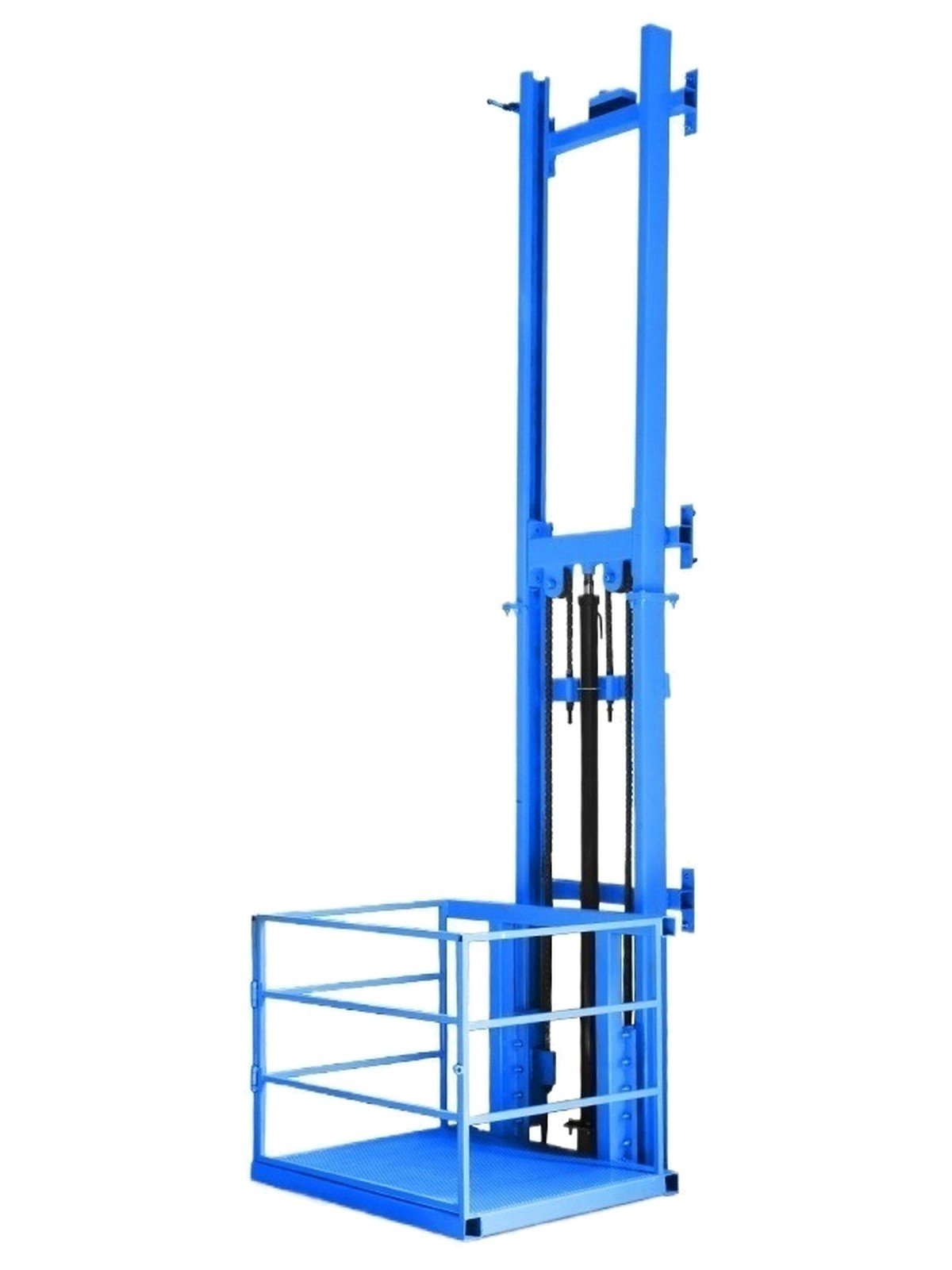
Guide Rail Cargo Lift 1000 kg
The heavier build for a tonne on the platform, on a single wall-mounted guide rail.
View product →
For fixed lifting installations used in general industry, see OSHA 29 CFR 1910.176 on materials handling and storage.

Reviews
There are no reviews yet.