
Wire Rope Electric Freight Elevator 500 kg, 3 mSKU: TMB-WR500-403369473
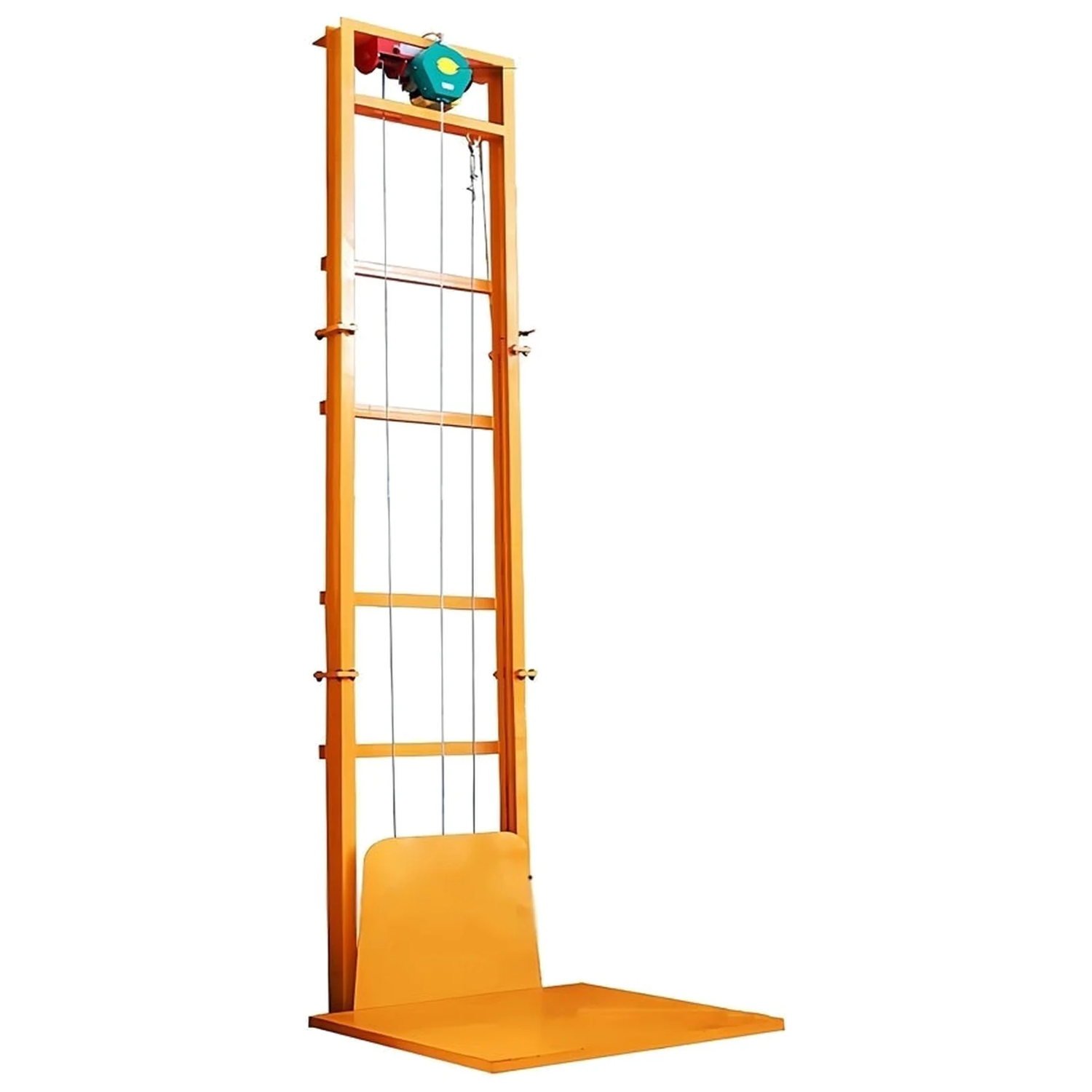
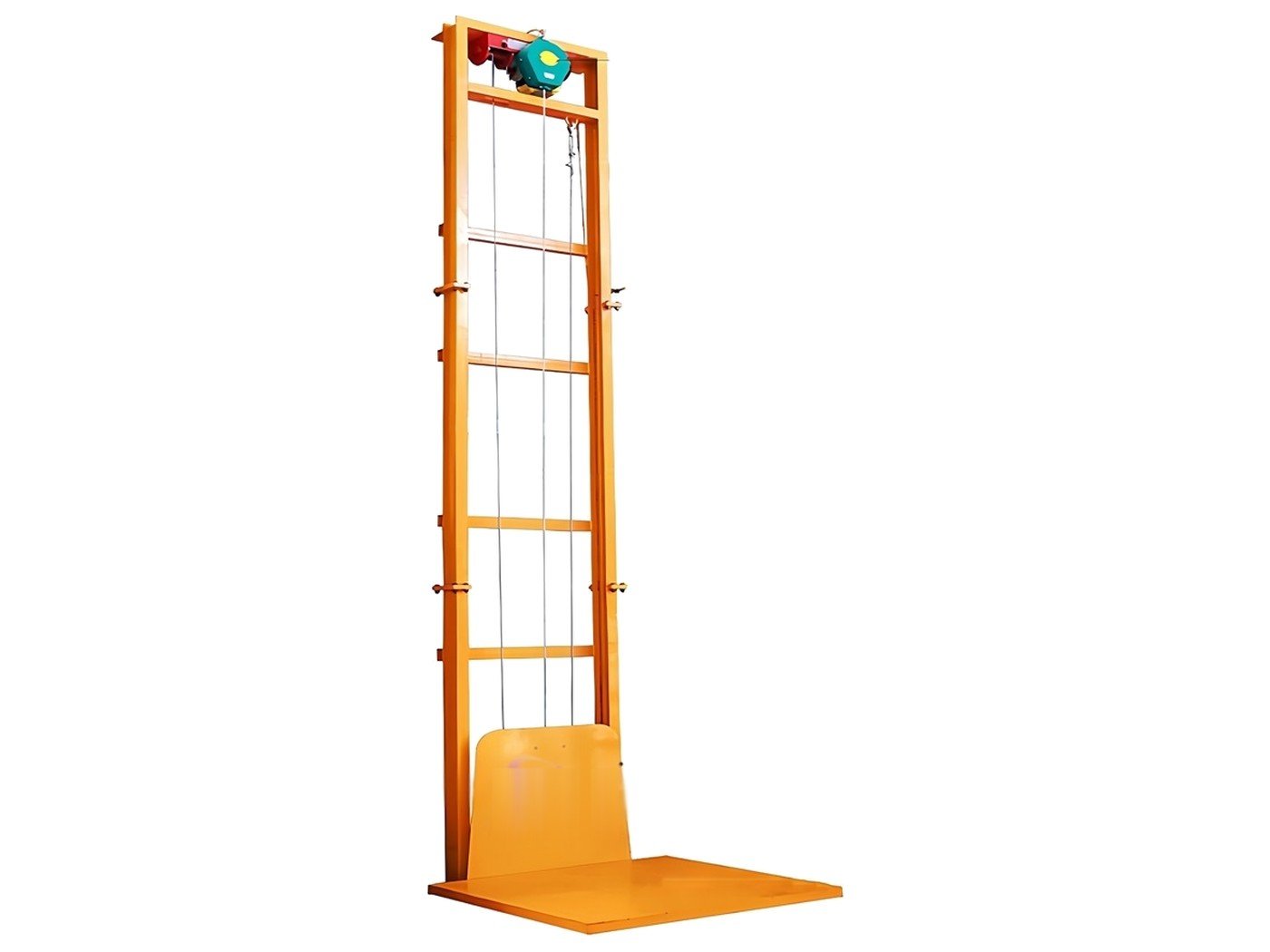
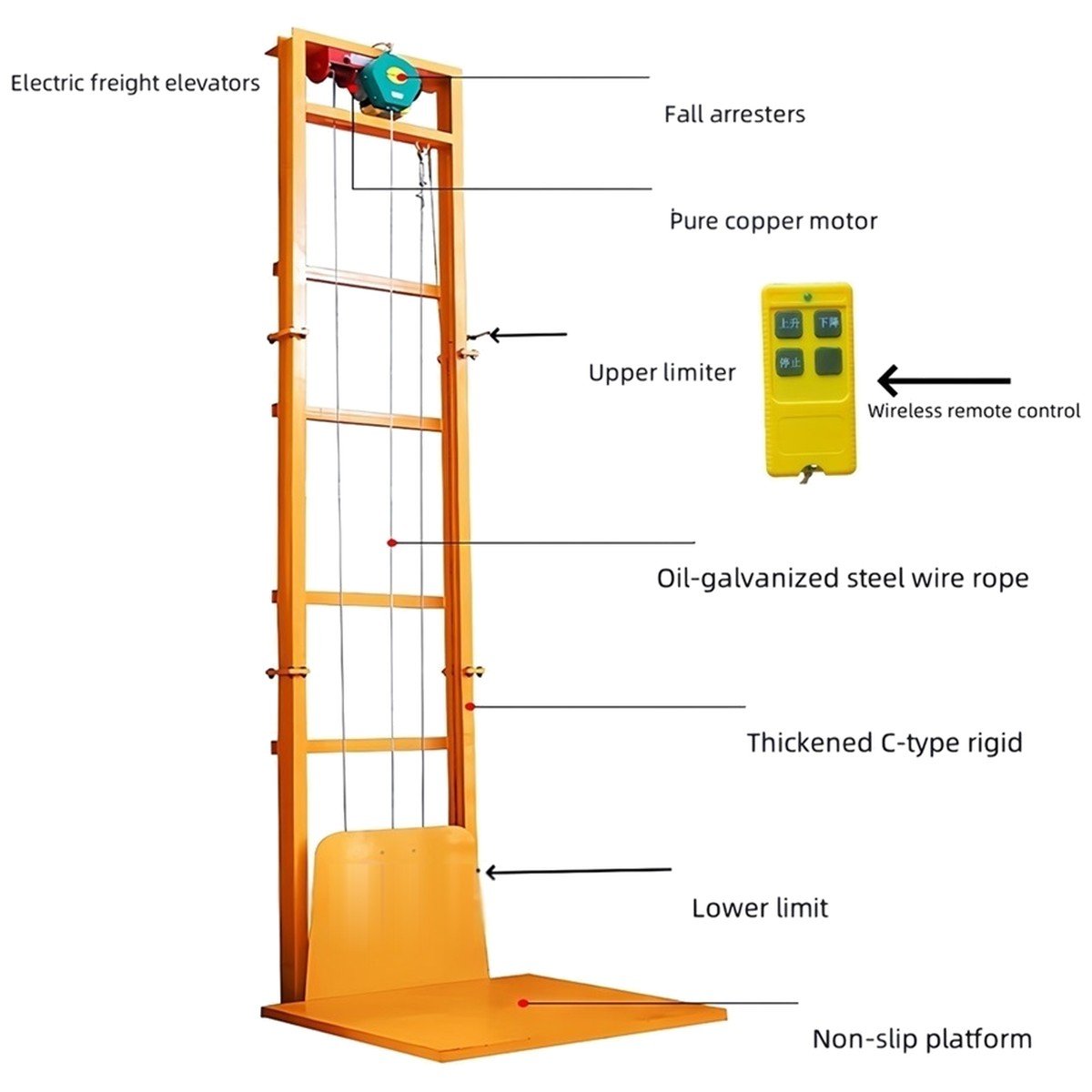
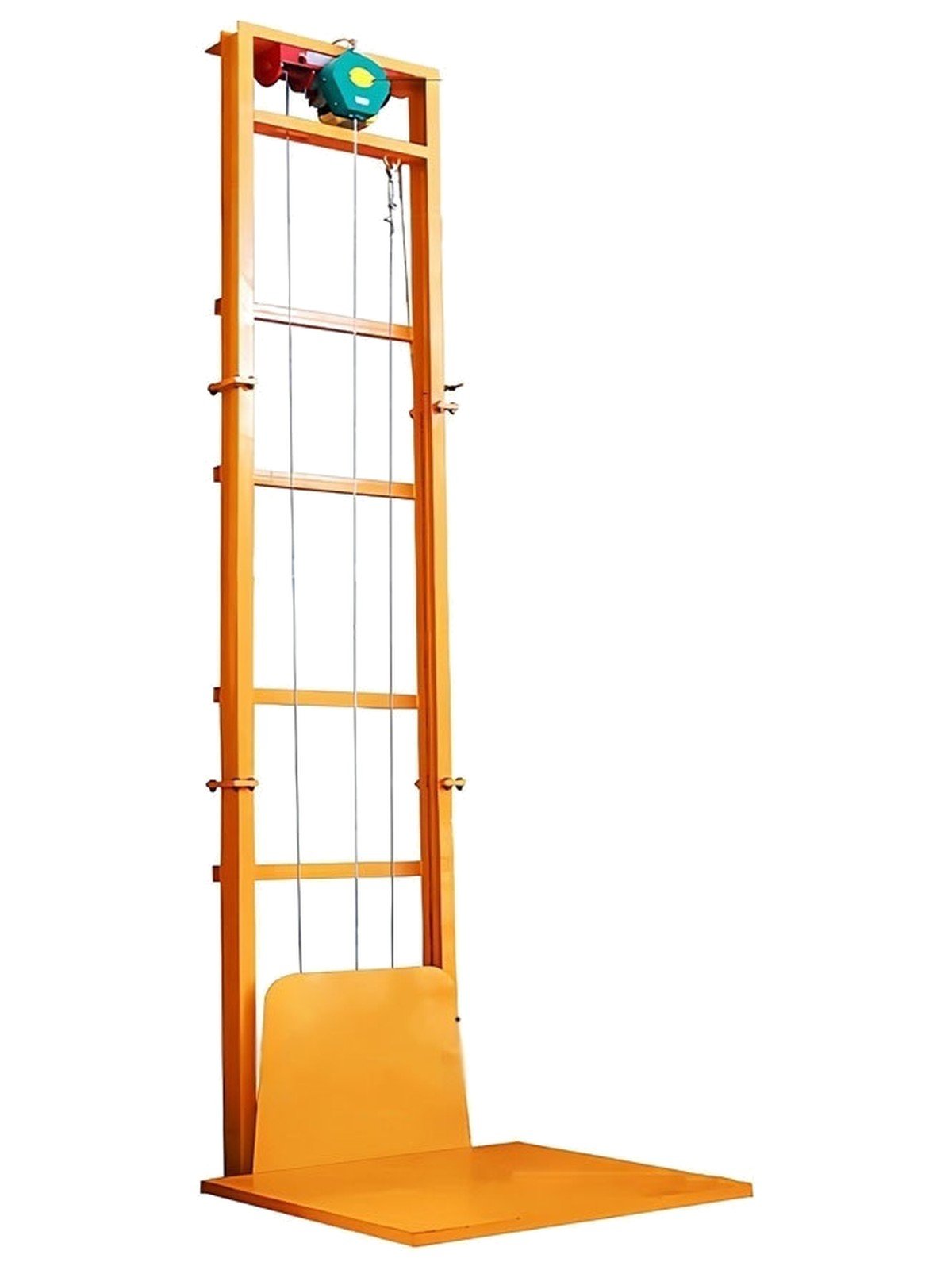
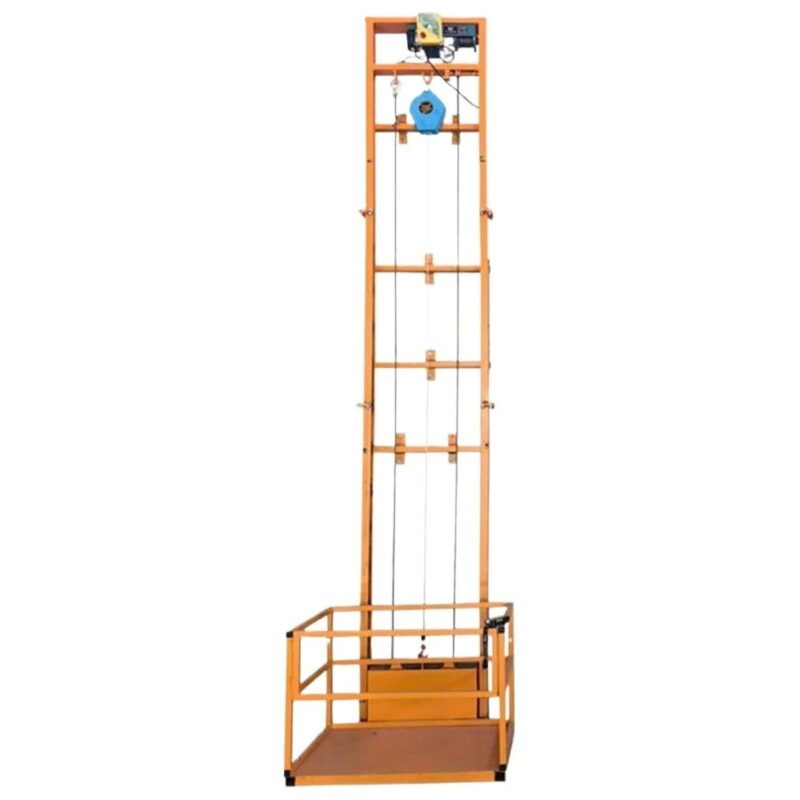
A winch at the top of a single C-section column, four runs of steel rope and a fall arrester on the carriage — 500 kg up to 3 m, bolted to the wall beside the stairs and worked from a wireless remote.
- ✓
Held in stock in the standard 500 kg build and dispatched from our own warehouse. A different lift height, platform size or colour is built to order — see custom options.
- ✓
Built to the specification published here — copper motor winch, steel rope and fall arrester on every unit we ship.
- ✓
Nothing ships until you approve the freight quote in writing.
- ✓
Packing list, commercial invoice and bill of lading sent with every shipment.
A winch at the top and nothing on the floor
The motor sits at the head of the column rather than beside it, so the lift takes no floor space at the bottom of the run — the platform comes down to the ground and the space in front of it stays clear for loading.
500 kg on one C-section column
The column is a thickened C-section rather than a tube, so the carriage runs inside the channel and the rope pulls stay inside the steel. One column means one wall line to fix, not a shaft.
Winch on top, platform to the floor
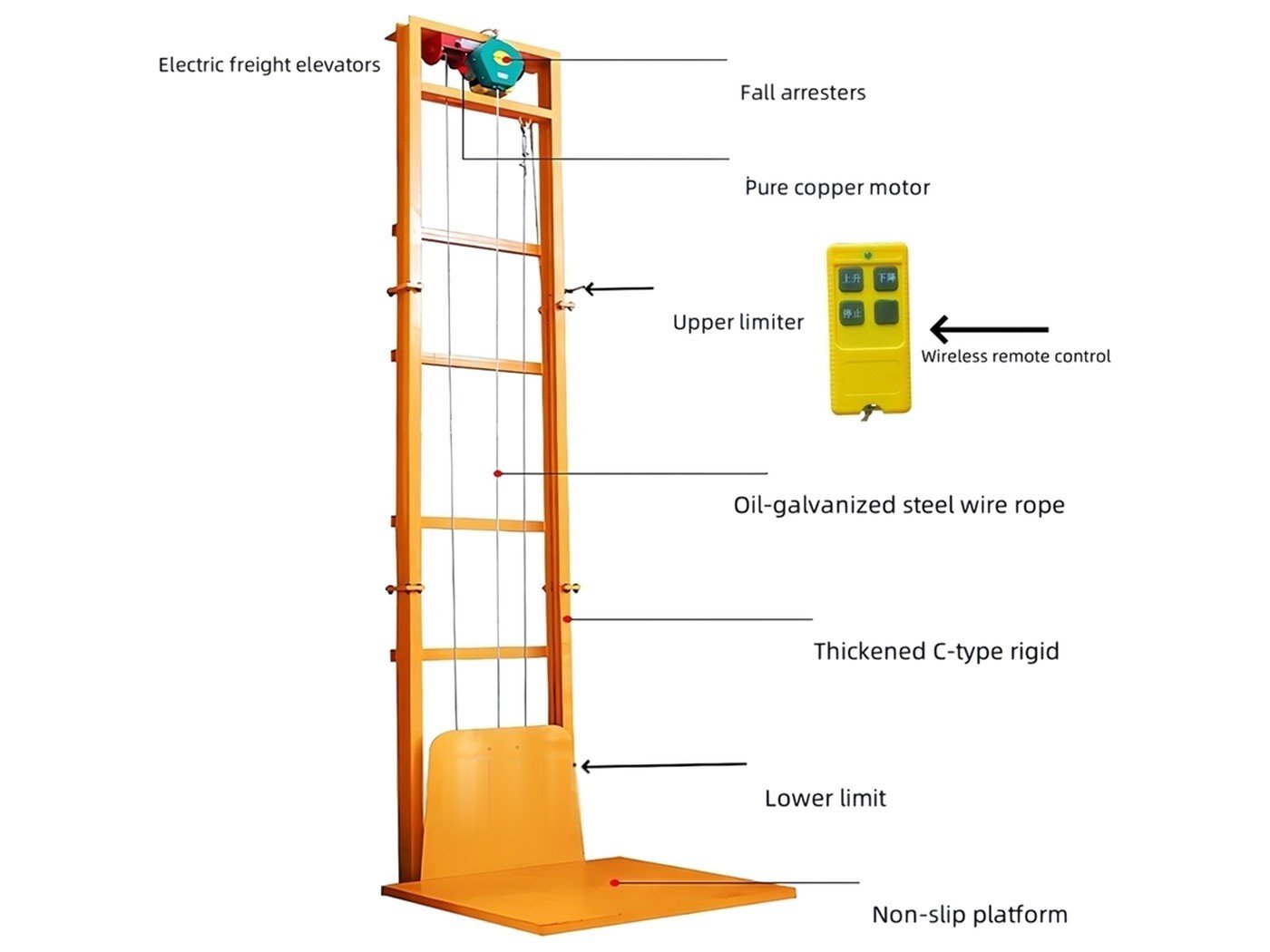
The copper-motor winch and the fall arresters sit at the head of the column, above the top platform position. Nothing is mounted at floor level, so the platform goes all the way down and goods are loaded straight off the floor.
Fall arrester and two limits
Fall arresters on the carriage catch the platform if a rope fails, and the column carries an upper limiter and a lower limit so the platform stops at both ends of its travel instead of running into the winch or the floor.
Wireless remote, hands free
The platform is worked from a wireless handset with up, down and stop, so the operator stands back from the column and out of the load's path rather than holding a pendant under it.
Wire rope freight elevator: technical data
Figures are for the standard build. Lift height is set by the height of the column, so tell us the floor-to-floor height and the headroom above the upper opening and we confirm the column length on a drawing.
Lifting & control
| Lifting mechanism | Copper-motor winch at the head of the column, oil-galvanised steel wire rope |
| Column | Thickened C-section steel, carriage running inside the channel |
| Lift height | Up to 3 m |
| Control | Wireless remote — up, down, stop |
| Limits | Upper limiter and lower limit on the column |
| Safety | Fall arresters on the carriage |
| Power supply | Confirmed per destination on the quotation drawing |
Build
| Platform size | 800 × 800 mm |
| Platform deck | Steel plate with an anti-slip surface |
| Load capacity | 500 kg |
| Machine weight | About 200 kg |
| Finish | Orange as standard; other colours to order |
| Installation | Column bolted to a wall — not a mobile unit |
Manually measured dimensions may vary slightly; refer to the actual machine. Lift height, platform size and power supply for a specific build are confirmed on the quotation drawing.
What holds it up, and what stops it falling
The column carries the platform, the winch at its head pulls the ropes, the fall arresters catch the carriage if a rope lets go, and the platform itself is a plate with a back plate that keeps the load square.
Copper motor at the head of the column
The winch is bolted to the top of the column, so the pull comes straight down the channel and the column takes it in compression. Putting the motor at the top also keeps the bottom of the run clear, which is where goods have to be loaded.
Two fall arresters on the carriage
The arresters sit on the carriage and grip the column if the rope goes slack, so a rope failure does not drop the platform. The upper limiter stops the carriage short of the winch and the lower limit stops it at floor level.
800 × 800 mm, down to the floor
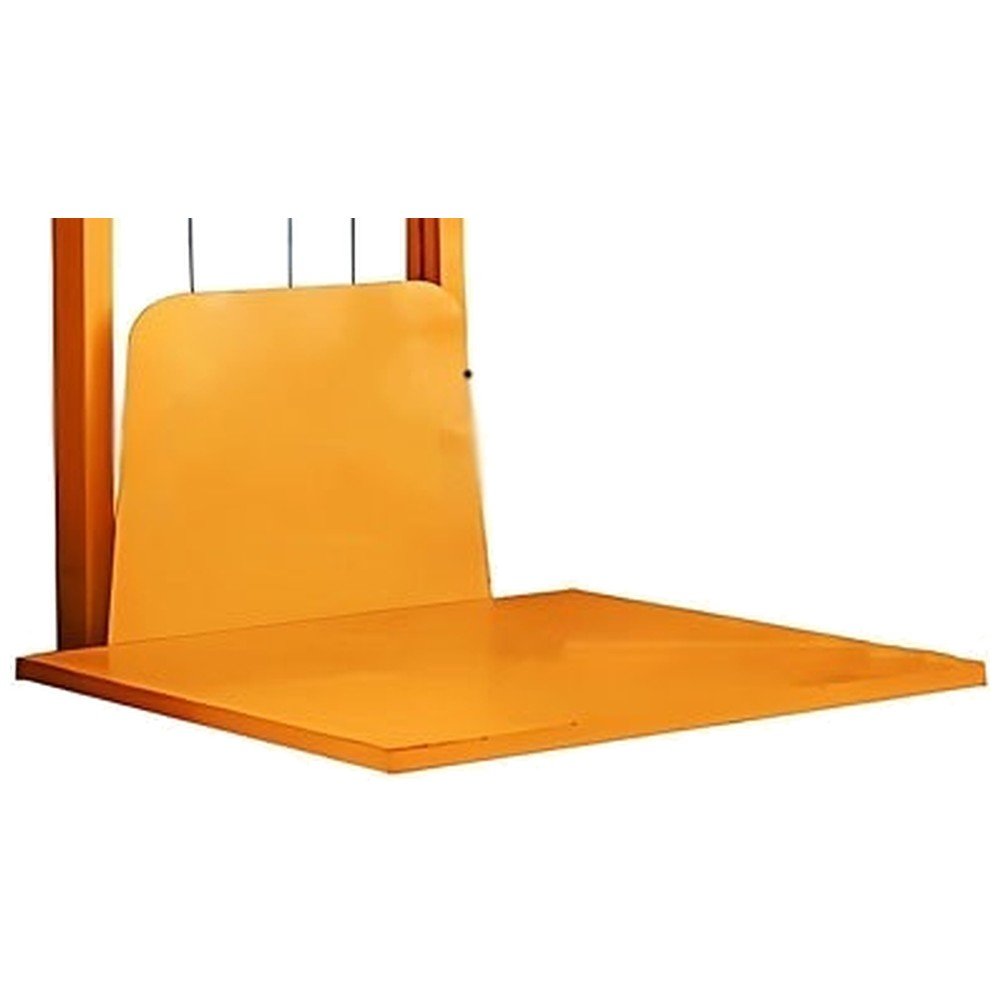
The platform is a steel plate with an anti-slip surface, sized to take a pallet, and it comes down level with the floor so goods are slid on rather than lifted over a lip. Nothing is mounted underneath it.
A back plate keeps the load square
The back plate stands the load up against the column end, so a carton or a sack does not slide back into the ropes as the platform climbs. The three open sides let you load from whichever side the room allows.
The back wall of a building with no shaft
A freight lift for goods between two floors, fixed to a wall beside an existing opening: one column, one power supply, and nothing standing on the floor at either end.
- Stock between two floorsCartons, sacks and crates go up or down the wall between a store and a shop floor, instead of being carried through the building by hand.
- Mezzanine and loft loadingGoods arrive at the ground floor and go straight up to a mezzanine deck through the opening above, with the platform coming down to floor level both times.
- Workshop and yard transfersBetween a workshop floor and an upper storage level, or from a yard into a raised store — the column is bolted to the wall and the platform does the lifting.
- Warehouse and basement storesDown into a basement store or up onto a dock at a different level, where a ramp would take the floor space and a goods elevator would never be justified.
Custom options on this wire rope lift
The 500 kg build with up to 3 m of lift is the standard machine. When the floor-to-floor height or the load is different, the same column and winch are built to your drawing.
- Lift heightUp to 3 m is standard. A longer column is built for a higher floor — send the floor-to-floor height and the headroom above the upper opening.
- Platform size800 × 800 mm is standard. A wider or deeper platform is built for panels, drums or long cartons, with the back plate moved to suit the loading side.
- Finish and your logoOrange as standard; other colours are confirmed when you order. Your logo can be applied before the machine leaves the factory.
- Loading edgeA roller deck or a ramp lip can be fitted to the loading edge so goods roll on and off instead of being lifted over the plate.
Freight is quoted separately and confirmed before dispatch
We ship worldwide by sea (LCL and FCL) and by air or express for sample orders. Freight is priced per destination because it depends on port, weight and volume — at about 200 kg this one usually ships as a single crate on a pallet.
-
You place the order online
Your order is recorded and the machine is reserved for you while the freight is quoted.
-
We send a freight quote in 24–48 hours
Priced to your nearest port, with transit time, or to your door as DDP if you prefer.
-
You confirm and pay the freight
One invoice for the shipping cost. Nothing is dispatched until you approve it.
-
We book, load and send documents
Packing list, commercial invoice and bill of lading go to your email, with photos of the packed goods.
Frequently asked questions
How high does it lift?
How much can it carry?
How is it different from a hydraulic lift?
What happens if a rope fails?
How is it installed?
How is it operated?
Can people ride on it?
What does it cost, and how is freight worked out?
Other lifts for the same kind of job
Same factory and the same spare-parts support. Choose by the drive and the load that has to go up.

Guide Rail Electric Lift 500 kg
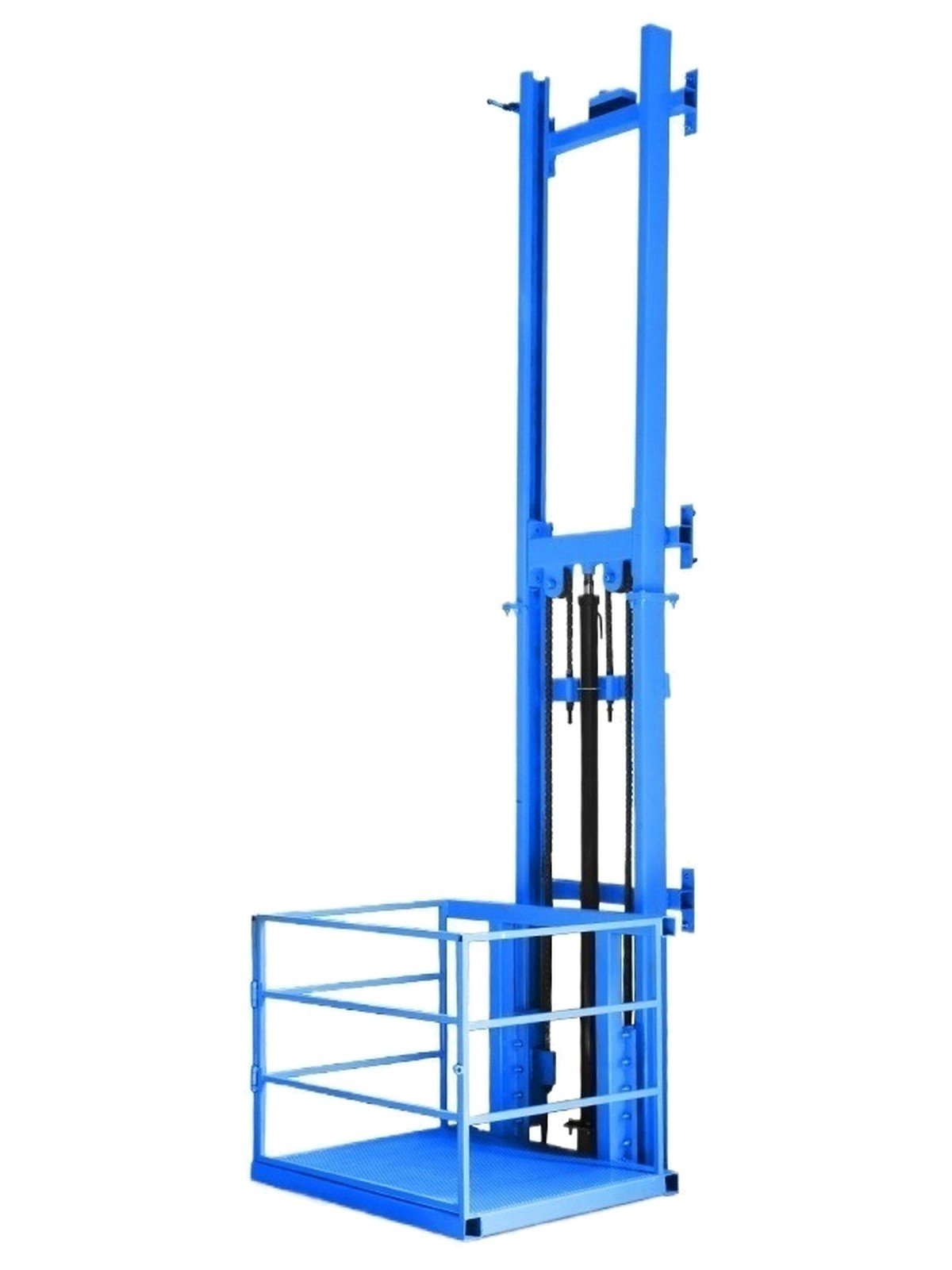
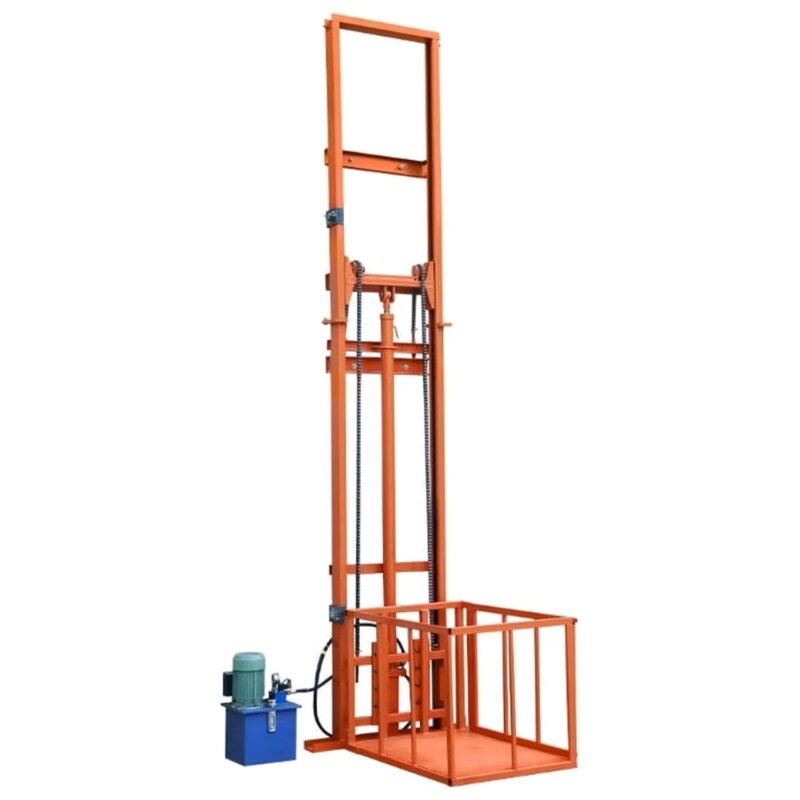
Same 500 kg and 3 m, but lifted by a hydraulic cylinder on four chains — an 80 kg machine, lighter again to handle.
View product →
Guide Rail Cargo Lift 1000 kg
When a tonne has to go up: the heavier hydraulic build, on the same single wall-mounted rail.
View product →

Cold Storage Panel Lift 4.5 m
When the load is a flat panel rather than a pallet: a single mast that holds a panel square against the wall.
View product →
For fixed lifting installations used in general industry, see OSHA 29 CFR 1910.176 on materials handling and storage.

Reviews
There are no reviews yet.