


Wall-Mounted Guide Rail Lift, 2–5 mSKU: TMB-WRL-524010567
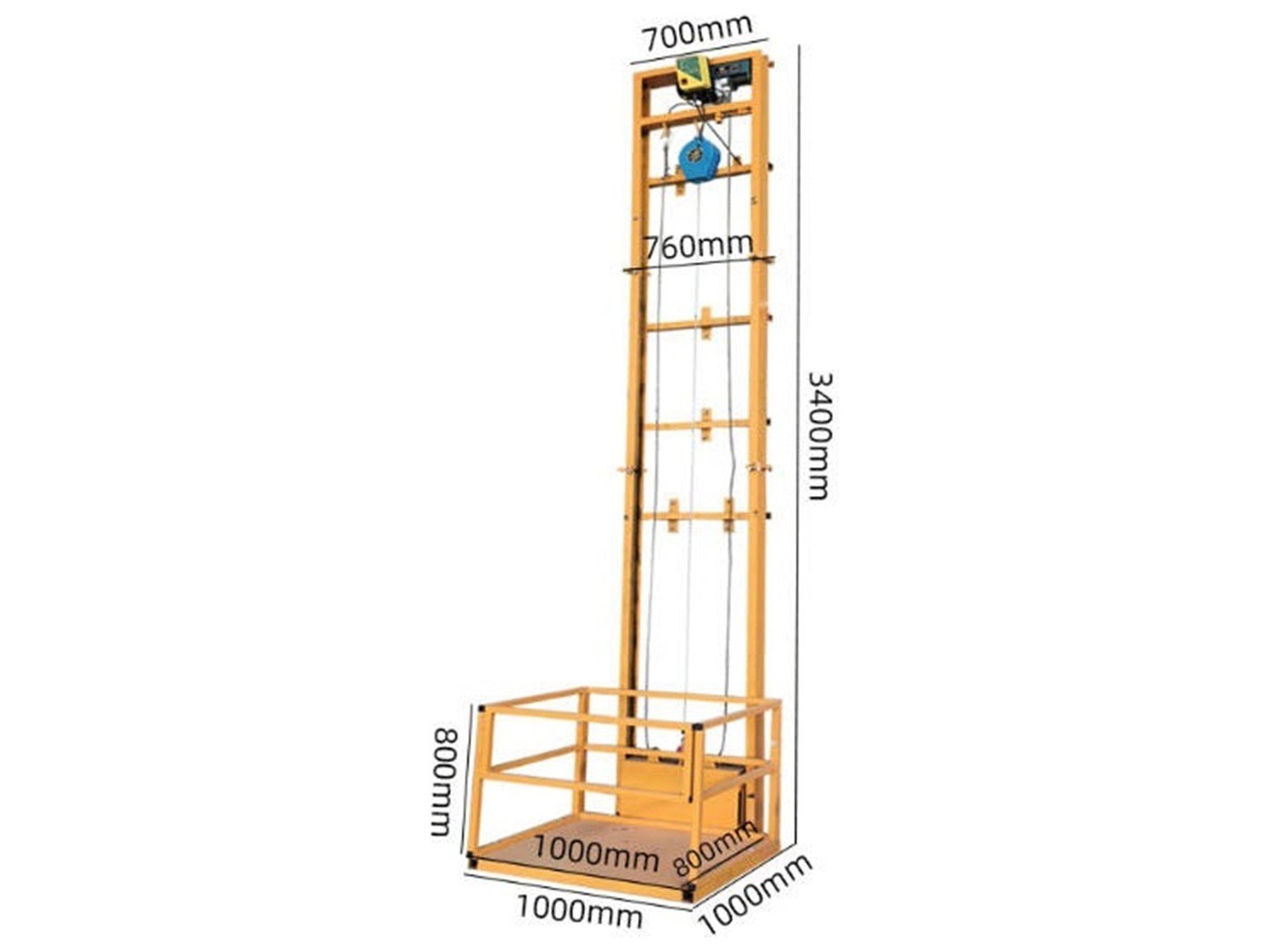
Two rails bolted to a wall, a caged deck that lands level with the floor, and the electric winch bolted to the head of the rails where it never travels with the load. 2 to 5 m of lift on a 1000 × 800 mm deck.
- ✓
Held in stock in the standard heights and dispatched from our own warehouse. Another height, a wider deck or a different colour is built to order — see custom options.
- ✓
Built to the specification published here — same rails, winch, rope and deck on every unit we ship.
- ✓
Nothing ships until you approve the freight quote in writing.
- ✓
Packing list, commercial invoice and bill of lading sent with every shipment.
The drive stays at the top, the goods stay at the bottom
Nothing heavy travels with the platform. The winch is bolted to the head of the rails, the rope does the lifting, and the wall carries the whole thing — so the lift needs no floor frame, no shaft and no pit.
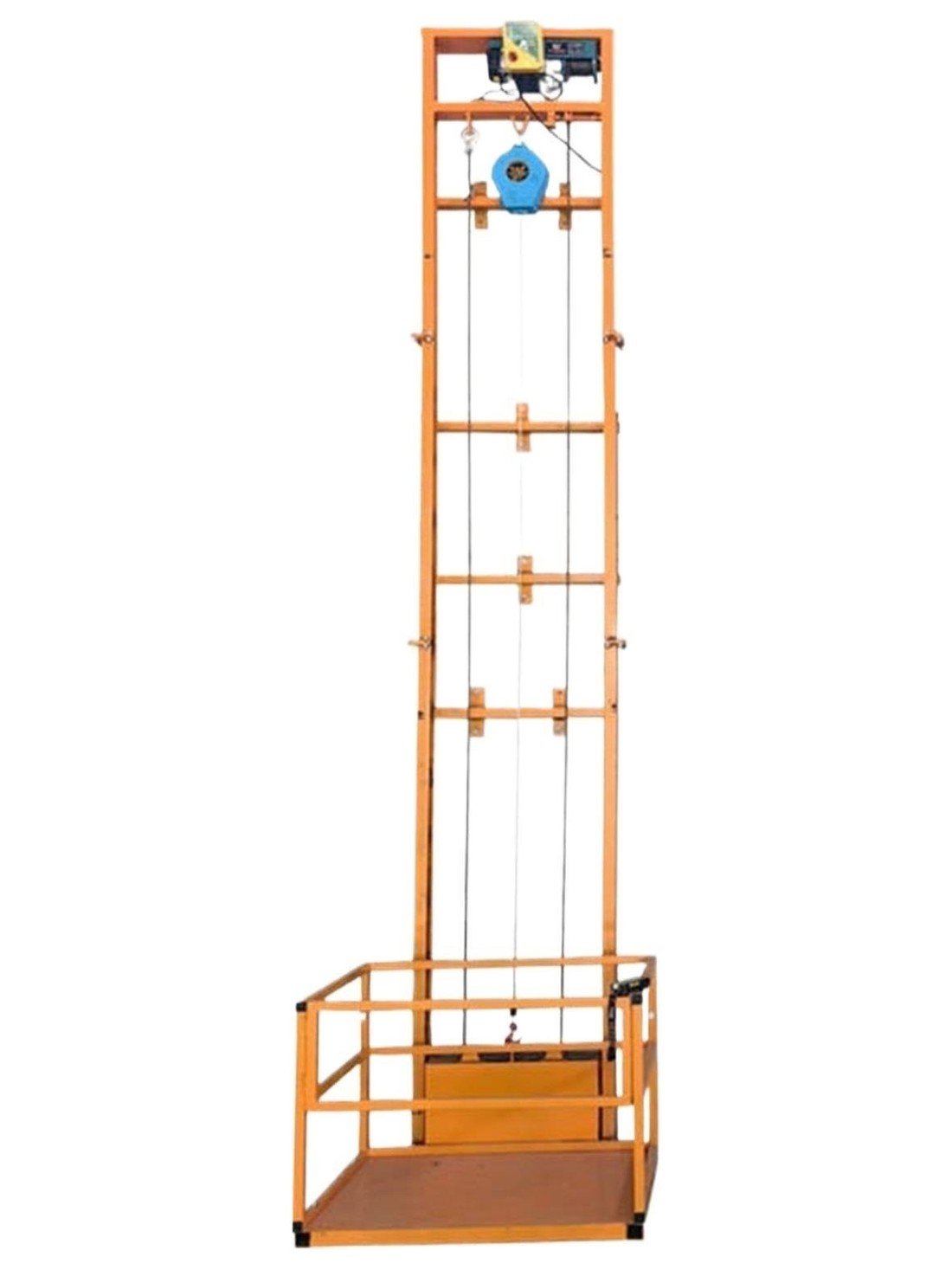
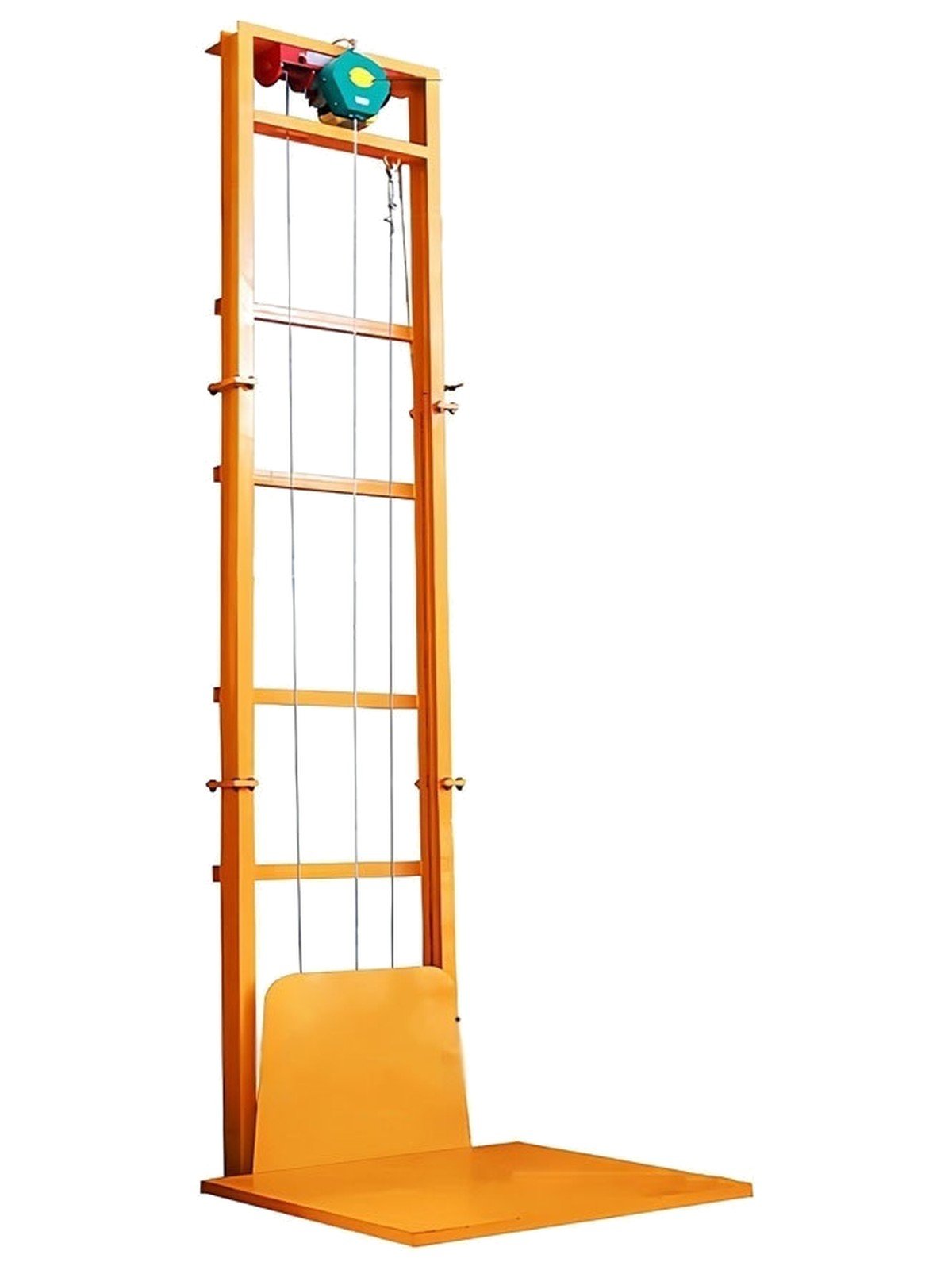
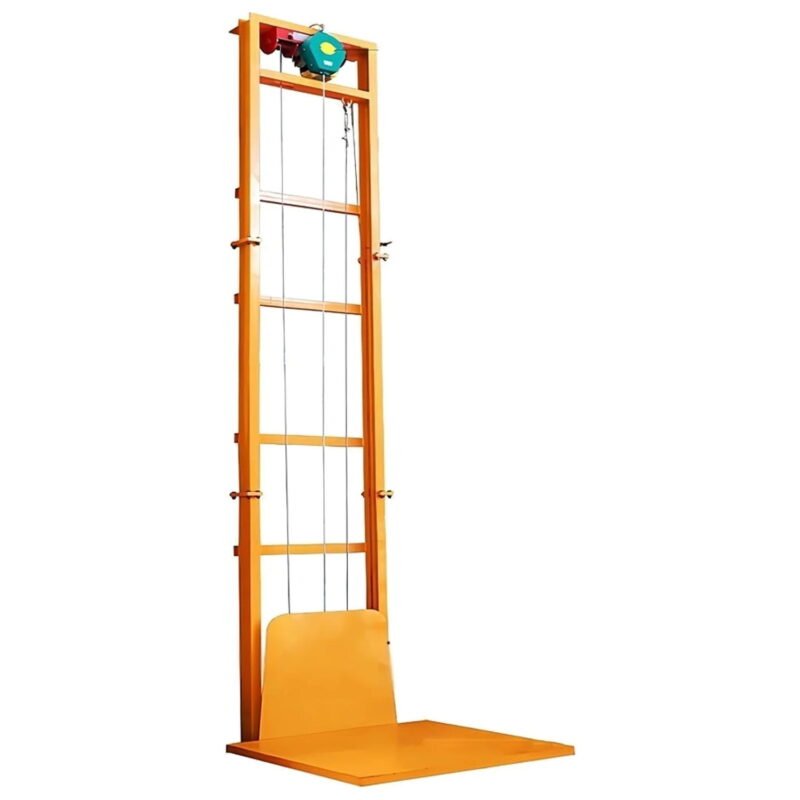
Winch at the head of the rails
The electric winch is bolted to the top cross member and pulls the platform up from above. Because the motor and drum never travel, the weight the rails carry is the load and the deck, not the drive as well.
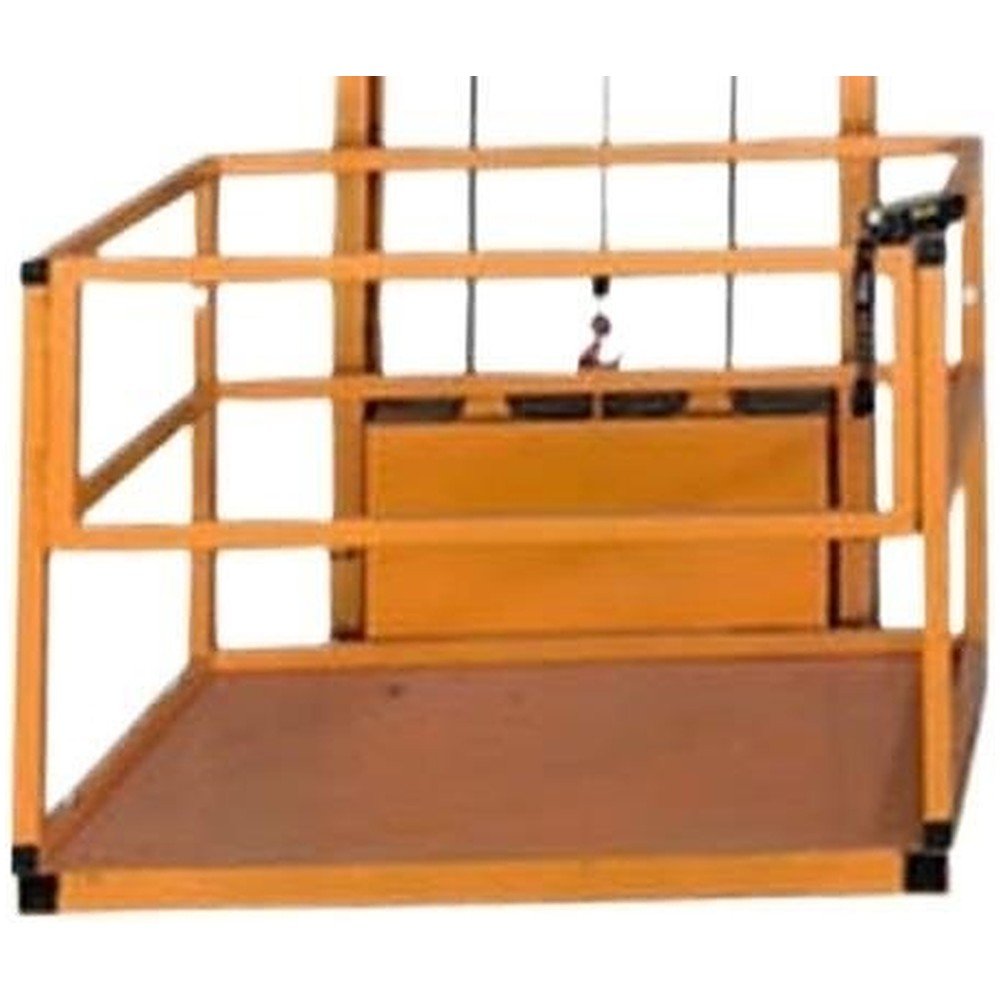
1000 × 800 mm deck, rails on three sides
The deck is steel plate inside 800 mm guardrails on three sides, with the front left open so goods go on at floor level from a pallet truck or by hand. The cage footprint is about 1000 × 1000 mm.
2, 3, 4 or 5 m on the same rails
Four standard heights: 2, 3, 4 and 5 m of lift, with rails 3.4, 4.4, 5.4 and 6.4 m long. The extra length above the lifting height is where the deck sits when it is at the top.
Bolted to a wall you already have
The two rails are held off the wall on steel brackets along their length, so there is no floor frame to grout in, no shaft to build and no pit to dig. The platform comes down level with the floor at the bottom of the run.
Guide rail lift: technical data
Four standard heights on the same rail frame and deck. Pick by the lifting height you need; the rails are always 1.4 m longer than the lift, because the deck has to stand at the top of the run.
| Model | Lifting height | Overall height | Deck | Guardrail |
|---|---|---|---|---|
| S | 2 m | 3.4 m | 1000 × 800 mm | 800 mm |
| M | 3 m | 4.4 m | 1000 × 800 mm | 800 mm |
| L | 4 m | 5.4 m | 1000 × 800 mm | 800 mm |
| XL | 5 m | 6.4 m | 1000 × 800 mm | 800 mm |
Lifting & drive
| Drive | Electric winch bolted to the top cross member — the drive does not travel |
| Rope | Steel wire rope from the drum, over a pulley block at the head, down to the platform |
| Lifting height | 2 / 3 / 4 / 5 m |
| Overall height | 3.4 / 4.4 / 5.4 / 6.4 m |
| Load rating | Set on the drawing against the deck and the winch you need |
| Control | Push-button pendant on a cable to the winch, plus a box on the rail |
| Power supply | Confirmed per destination on the quotation drawing |
Deck, rails & fixing
| Deck | 1000 × 800 mm steel plate, guardrails on three sides |
| Cage footprint | About 1000 × 1000 mm including the guardrail frame |
| Guardrail | 800 mm high, three sides, loading side open |
| Rail frame | Two rails, 700 mm across, 760 mm carriage |
| Fixing | Steel wall brackets along the rails — no floor frame, no shaft, no pit |
| Finish | Welded steel, primed and painted |
| Colours | Yellow-orange and blue as shown; other colours to order |
Manually measured dimensions may vary slightly; refer to the actual machine. Height, deck size, bracket layout, colour, winch rating and power supply for a specific build are confirmed on the quotation drawing.
Winch at the head, deck on two rails
The winch is bolted to the top of the frame, the rope runs over the pulley block and down to the platform, and the two rails keep the deck square against the wall for the whole run.
The winch is bolted to the head
The electric winch sits on the top cross member with its control box beside it. It pulls the platform up from above, so the motor and drum never travel with the load — the rails only carry the deck and what is on it.
Wire rope over a pulley block
The rope leaves the drum, runs over the pulley block at the head and down to the carriage. It is in the open between the rails for its whole run, so a frayed strand or a slack rope is seen on the walk-round instead of being hidden inside a mast.
1000 × 800 mm, rails on three sides
The deck is steel plate inside 800 mm guardrails on three sides, with the front left open so goods go on at floor level from a pallet truck or by hand. The frame is welded box section, so the deck stays flat under a load that sits to one corner.
Held off the wall on brackets
The two rails are held off the wall on steel brackets along their length rather than standing on a floor frame. That is what lets the platform come down level with the floor: there is nothing at the bottom to step over, and no shaft or pit to build around the lift.
Factory walls, stair landings and stockrooms
Anywhere goods have to change floor and there is a wall to bolt to: the lift takes the width of a doorway along the wall and leaves the floor clear at both ends.
- Factory and warehouse wallsCartons, parts and drums go up to a mezzanine or a first-floor store along a wall that is already there, with the deck loaded at floor level at the bottom of the run.
- Stair and platform landingsThe rails are fixed beside an outside stair and the deck lands level with the steel platform at the top, so goods come up from the yard without being carried up the steps.
- Workshops and plant roomsHeavy parts and toolboxes go up to a service floor on a deck with rails on three sides, without blocking the roller door or the walkway for the rest of the shift.
- Stockrooms and back storesDeliveries come in at the back door and go straight up to the stock floor along the wall, on a lift that takes less floor space than a ramp would.
Custom options on this rail lift
Four heights and two colours are standard. Anything beyond that is built on the same rail frame and deck, from the same drawings.
- Lifting height2, 3, 4 and 5 m of lift are standard, with rails of 3.4 to 6.4 m. A height between those figures is built to the job — send the floor-to-floor distance and the headroom above the upper landing.
- Deck1000 × 800 mm is standard. A wider or deeper deck is built on the same carriage, and the guardrail can be opened on a different side to suit the way you load.
- ColourYellow-orange and blue are standard, as shown in the photos. Any other colour is matched when you order, and your logo can be applied before the machine leaves the factory.
- Fixing and ratingThe wall brackets are drawn for the wall you have — send photos of it and the landing. The winch, rope and shackle are sized for the weight you declare per trip, and both go on the quotation drawing.
Freight is quoted separately and confirmed before dispatch
We ship worldwide by sea (LCL and FCL) and by air or express for smaller parts. The rails are the long item in the crate, so a 3.4 m rail and a 6.4 m rail do not ship the same way — freight is priced per height and per destination.
-
You place the order online
Your order is recorded and the machine is reserved while the freight is quoted.
-
We send a freight quote in 24–48 hours
Priced to your nearest port, with transit time, or to your door as DDP if you prefer.
-
You confirm and pay the freight
One invoice for the shipping cost. Nothing is dispatched until you approve it.
-
We book, load and send documents
Packing list, commercial invoice and bill of lading go to your email, with photos of the packed goods.
Frequently asked questions
Which height do I need?
How much does it lift?
How is it fixed to the wall?
Does it need a shaft or a pit?
What power supply does it need?
What colours can I have?
Can I have a bigger deck?
How long does delivery take?
Other lifts for the same kind of job
Same factory and the same spare-parts support. Choose by the height you have to reach, the platform you need and the drive.
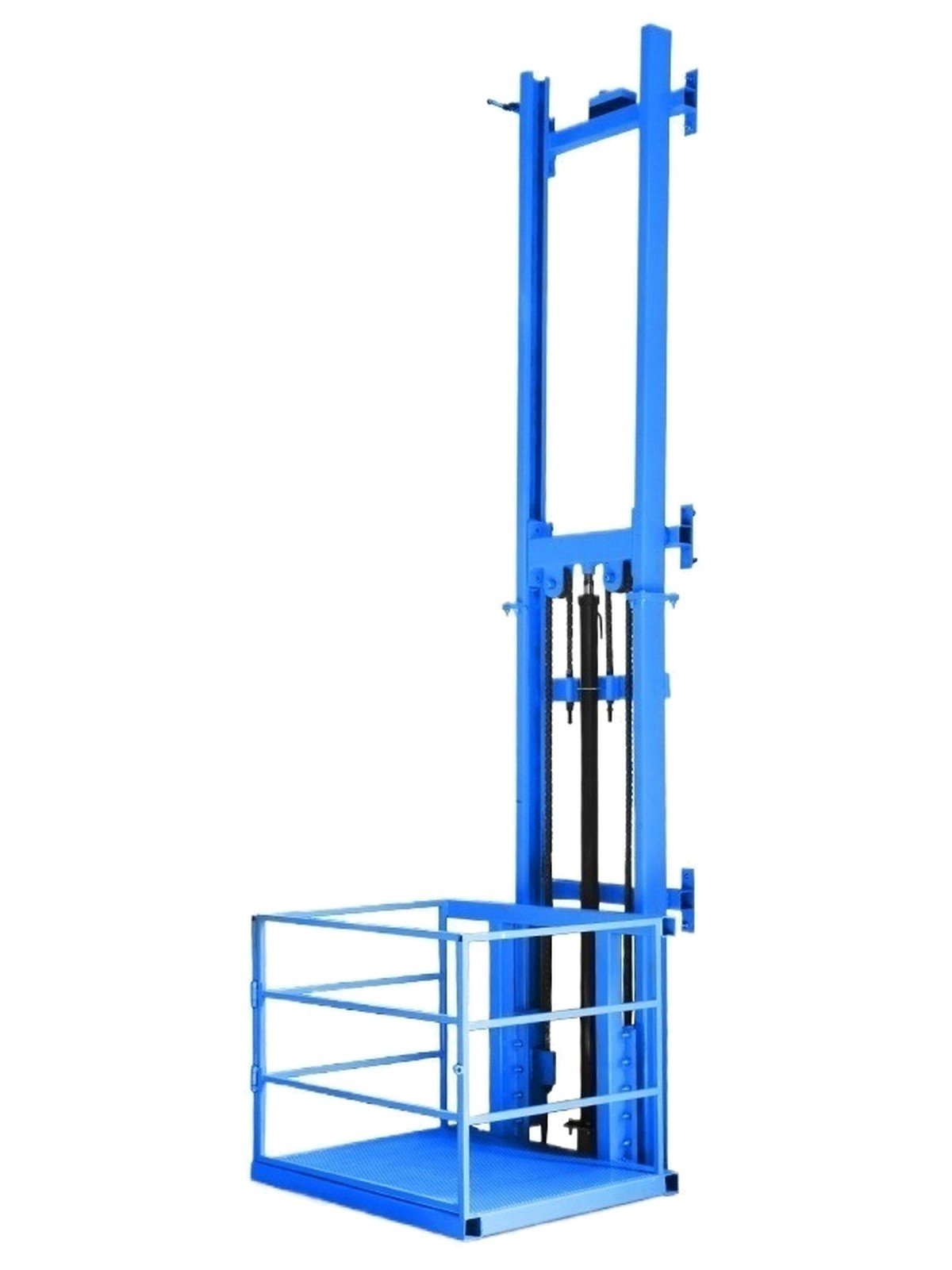
Guide Rail Cargo Lift 1000 kg
The same wall-fixed idea built for a tonne on the platform, with a hydraulic cylinder instead of a top-mounted winch.
View product →
Wire Rope Freight Elevator 500 kg
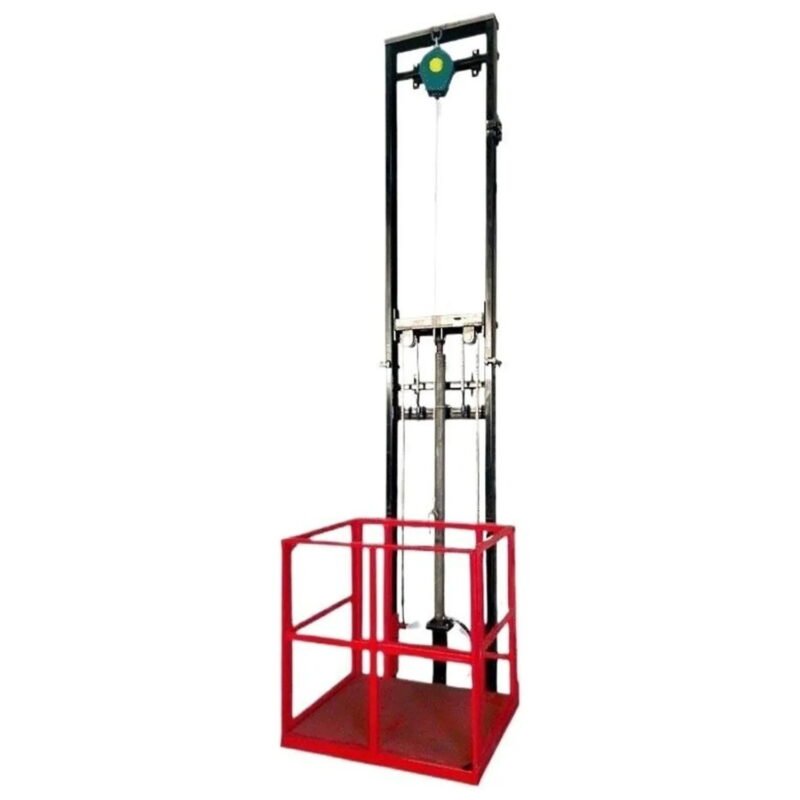
Winch at the column head and a fenced platform, when the floor at the bottom has to stay clear.
View product →

Cage Cargo Lift 4 m
Free-standing frame with a fenced deck on two posts, for when there is no wall to bolt to.
View product →
For fixed lifting installations used in general industry, see OSHA 29 CFR 1910.176 on materials handling and storage.

Reviews
There are no reviews yet.